We come to the last distinguishing mark of the infant Christian church in this series. This series does not give an exhaustive list of distinguishing marks, only those listed in the first major snapshot of the infant Christian church given to us in the Book of Acts (Acts 2:42-47).
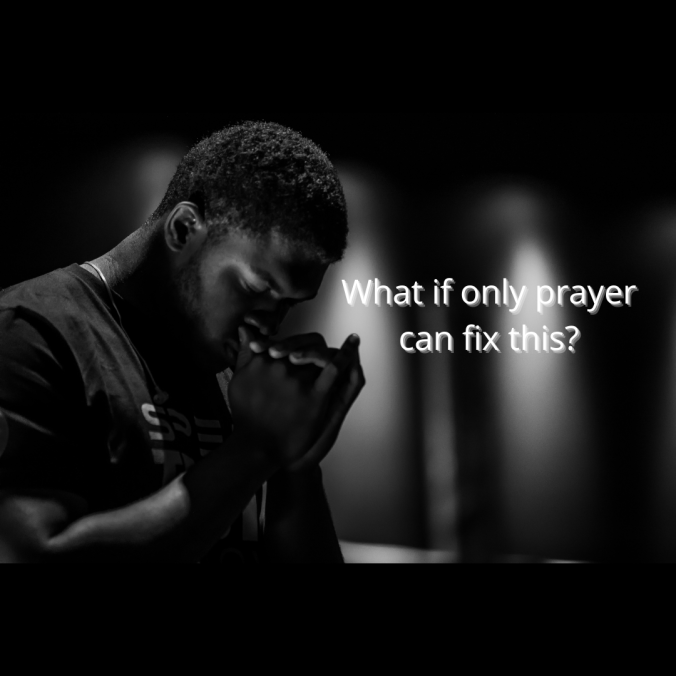
This continues a series of articles on the distinguishing marks of the infant Christian church. The infant Christian church’s devotion to prayer comprises its fifth distinguishing mark (Acts 2:42).
In the original Greek, the word often translated “prayer” is pluralized and preceded by the Greek article. Literally, we would render the Greek, “the prayers” and not simply “prayer.” The members of the infant church not only devoted themselves to the act of prayer, but they devoted themselves to regular routine times of prayer. They did not pray only at times they felt moved to pray but established regular times to gather together and pray. A healthy church prays regularly and routinely. Prayers do not simply punctuate the end of a song or fill a liturgical role in the service, but flow from the heart of those who make these times of regular prayer foundational to their lives.
Luke showed us the believers praying before. Before the day of Pentecost, they were in a room praying regularly, likely for the power from on high Jesus promised (Acts 1:14) . Luke will show us again, time after time, the early church praying (e.g. Acts 3:1). Prayer gives the church her lifeblood.
The scholar Dr A. T. Pierson once said, “There has never been a spiritual awakening in any country or locality that did not begin in united prayer.” Charles Spurgeon was said to have a group regularly meeting in the steam cellar of the church for the sole purpose of praying for the ministry of the church. It was said of John Knox that one day when he went into the room he often withdrew to, his wife followed him. When she entered, she heard him pleading to God in broken sentences, “Lord, wilt thou grant me Scotland.”
The prayer life of a congregation serves as one of the spiritual barometers that measures a congregation’s health. Is your congregational prayer life healthy? Is your individual prayer life for your congregation’s ministry healthy? If you cannot answer in the affirmative, drop what you are reading and fall on your knees. Your Lord calls you; will you listen?
For those looking to pray for our county, I invite you to join a group of us Mondays by the flagpole near the courthouse in Wellsboro at 4pm (or a little thereafter). Many prayers go from that place weekly for the welfare of our community. It matters little your denomination, only your willingness to join fellow brothers and sisters in beseeching Christ for times of refreshing to come to the people in our community.
The fourth distinguishing mark of the infant Christian church we look at in this series rests on the phrase “the breaking of the bread (Acts 2:46).” Some biblical scholars take this as a reference to the Lord’s Supper, while others take it as an idiomatic phrase referring to sharing a meal together.
Who does not like a good photograph? Photographs capture the special times in life, the birthdays, weddings, and moments that crystalize what is important in life. Though cameras were yet to be invented at the birth of the infant Christian Church, Luke, the author of the Book of Acts, through the inspiration of the Holy Spirit, wrote down words that give us photographs of that church. The widest angle shot appears in Acts 2:42-47, after Peter’s Pentecost sermon. There we see what the church was doing in those early years. Those happenings represent what the one, true church has always been.
The protestant reformer John Calvin starts the first chapter of his theological magnus opus with the words, “Our wisdom, in so far as it ought to be deemed true and solid wisdom, consists of two parts: the knowledge of God and of ourselves.” It is tempting to think Calvin means that the pursuit of wisdom involves searching our souls and experiences. Continue reading →
The philosopher Alasdair McIntyre once said that for something to make sense it needs to be put into the context of a story. So many of our disagreements today stem from arguments over what the real story is. The Bible offers us a story that can be counted on, one that makes sense of the world we live in. This story can be trusted because it comes from God.
Prior to the day of Pentecost, Jesus’ disciples committed themselves to prayer in an upper room (Acts 1:12-14). Jesus told his disciples to wait in Jerusalem until they received the gift God the Father had promised (Acts 1:4). Never underestimate the power of prayer. God has many times used the prayers of his people to accomplish great things.
The philosopher Alasdair Macintyre said that for something to be understandable it must find its place in a story. For example, suppose you are waiting outside a store on Main Street when all the sudden a young man comes up to you and says, “The Latin name of the common wild duck is Histrionicus histrionicus histrionicus.” The sentence makes complete sense, but you have no idea what to make of it. Maybe this young man suffers from mental illness, and he is repeating this phrase for no apparent reason. Maybe he has mistaken you for someone else he met at the last meeting of his bird watching club. He thinks you are the person who asked him, “Do you happen to know the Latin name of the common wild duck?” To which he now answers your question from the other day. Maybe this young man is a spy, and he just uttered the code sentence to identify himself to his contact.
Recently I met a friend I had not seen since the pandemic began. He was not his characteristic confident self. He was fear stricken. Understandably being in his 70’s he must be prudent and safe, but his demeanor was that of anxiety and fear as was our conversation. Continue reading →


![THE_FIRST_NAIL[3]](https://i0.wp.com/enactedword.com/wp-content/uploads/2018/03/the_first_nail3-e1520870410464.jpg?resize=633%2C603&ssl=1)